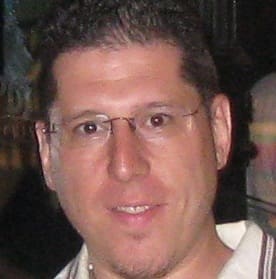
Lorraine Anderson Wants to Tell a Joke Beyond Borders

A FUNNY THING HAPPENED ON THE WAY TO THE STORY…

By Lorraine Anderson 

Lorraine April 2013This was not the story I had intended to write.

Most of the other authors are going to tell you how they noticed that the first book didn’t cover this God or that God or didn’t go to this country or that and they thought, well, they should explore that story.

Not me.  I wanted to start out with a joke.

“One Small Step” is the story of the friendship of a young girl, Mary, a devoted follower of the Goddess Dôn, and her neighbor, a resurrected king of Brittany named Conan, a Christian, and how they influence each other over the course of a decade, with lasting results.

“One Small Step” started out being a light-hearted story – a story of funny names and mistaken identity.  But as the story progressed, the characters took over.  The more I struggled to keep it light, the darker it became.  So I finally surrendered to the dark side, and my light-hearted attempt became a story of lost and found faith.

Conan was an actual king, credited with founding Brittany.  Very few accounts of him are known, at least according to that unimpeachable source Wikipedia.  Most of what I have Conan tell Mary was gleaned from these stories I found online, with a few spins of my own.  I wasn’t terribly concerned about keeping the history accurate; history is perception, no matter how accurate a source tries to be.

I did wonder how the children born during and after the coming would perceive the Gods.  After all, they had never known a world without the Gods walking the Earth.  What influence would the Gods have on these children?  How would the adults handle these children brought up in new faiths?  And how would the Christian church handle these “Gods”?

I also wondered about all of these people moving back to their ancestral lands.  What does this do to the world’s economy?  Would England or Germany (just to use two examples) end up like Japan, using every available space?  Would the culture change to reflect that?  I ended up only hinting at this.

I do want to thank the guys at Crazy 8 for letting me play in their sandbox, and I especially want to acknowledge Bob Greenberger for his invaluable gentle suggestions and help.  Many, many thanks!

ReDeus: Beyond Borders will be available in print and digital formats in late May.

Lawrence M. Schoen Talks the First Crossover Beyond Borders

By Lawrence M. Schoen

Lawrence SchoenThe exciting thing about working in a shared universe is the sharing. When I learned there was going to be a second ReDeus volume, and that I was being invited back, I knew I wanted to do two things: 1) continue developing the characters from my first story, “Coca Xocolātl,” and 2) grab one or more characters from one of the other stories in the first book.

“Singing for the Man” reunites us with retired language professor Matlal Alejandro Garcia y Fuentes. In the last story, at eighty-five years of age, Mat became a chess piece in a game being played by Huehuecoyotl, the Aztec trickster god known variously as “Old Drum” and “Old Coyote.”

Mat’s academic specialty was the indigenous languages of Mexico, which have all but been supplanted by Spanish since the previous reign of the gods, and Huehuecoyotl would like to bring them back. By the end of that story, Mat’s begun writing popular songs retelling in a modern voice the myths and legends of the Aztec gods. He’s been teamed up with a teenage pop star and her shape-changing bodyguard/composer and together they are not only stirring up interest in more than a dozen all but forgotten languages, but spreading the word of the Aztec pantheon throughout the newly drawn borders of Mexico and into the continental United States as well.

The new story picks up about a year later. Matlal and company have been on tour nonstop, and even though Mat’s been getting younger and younger, they could use a break. He convinces Huehuecoyotl they need a vacation, and when the god agrees, he says he wants to go to the Isle of Man!

I’ll spare you any spoilers for what happens when they get there, and instead tell you why I wanted them there. First, I was inspired by Phil Giunta’s brilliant story “There Be in Dreams No War.” Once I read that, I knew I wanted to steal (cough cough) I mean, borrow from it. Shared world, remember? I contacted Robert Greenberger to make sure that I wasn’t going to upset anyone with my plans and he told me clear any “borrowing” with the author of the original story first.

So I contacted Phil and told him that, if he didn’t mind, I would very much like to play with some of the characters from his story. Not only did he not mind, he gave me carte blanche to run wild and do anything I wanted! “Seriously?” I said. “Sure,” he said. Wow.

So, I had a destination. I had some “borrowed” characters. Now I just needed an excuse that would bring my characters into conflict with the borrowed characters. I needed a story.

I ended up with three.

I’m only going to tell you about one; sorry, you have to buy the book to learn the other two. Okay, okay, I’ll give you some hints. One storyline follows up on an idea from Aztec mythology, because, you know, those are my guys. Another storyline is a direct extension from Phil’s story, and gives a tip of the hat to Irish mythos. The third storyline though, that’s so strange that it’s not even fiction. It really happened.

On the Isle of Man they speak English. But they also speak Manx. Except… Manx officially went extinct back in 1974 when the last known native speaker, a fisherman named Ned Maddrell, died at the age of 96. The remarkable thing though was that the people on the Isle of Man (which has fewer than 85,000 souls to begin with) brought it back. They used it in signage and on radio. They taught it in classrooms. And in the years since it went extinct a small portion of the next generation grew up speaking the language as their mother tongue. Manx had native speakers again.

Twenty-one years after The Return in 2012, Manx is alive and well. And even though in our reality a native Nahuatl speaker like Matlal probably never set foot upon the Isle of Man, how could I not send him there and witness firsthand the very thing he’s trying to do with his own languages back home?

Of course, some gods, both Aztec and Irish, get in the way of things, but that’s all I can say about that.

ReDeus: Beyond Borders will be available in print and as a digital book in late May.

Steven H. Wilson goes Beyond Borders to Worship Odin

By Steven H, Wilson

Steven H. Wilson AIn ReDeus: Divine Tales, I told how the Norse God Bragi came to mentor a desperate musician who was down and out as a result of the fall of YouTube. Axel Sage had hit it so big on the Web in 2012 that he was up for a role on The Voice, and his fame and fortune were assured. Then the gods returned, shut down the Internet for all intents and purposes, and Axel’s hopes were dashed until Bragi came into his life. Of course, Axel had to outsmart Loki before he could claim his place as Bragi’s pupil. Now he’s training as a real Norse bard.

This time, I chose to take my young rock star to Sweden, where Odin and the Aesir are assembling a new brotherhood of Vikings and a new sisterhood of Valkyries. The Aesir are probably the most techno-friendly of the gods, so they’ve embraced reality TV. Their new followers are recruited on the twin series Who Wants to Be a Viking? and Who Wants to Be a Valkyrie? Axel lands right in the thick of it, falling for a beautiful warrior maiden named Annika. Odin wants Axel, who’s enjoyed fame the world over for a decade, to get married, settle down and make his home with the Vikings. But Axel doesn’t believe in warfare, especially when it’s war waged as an amusement. He also can’t be sure his feelings for Annika are genuine, because Loki’s hovering around again. How does he know he’s not under some sort of spell? It all comes to a head when a young Viking challenges Axel to battle for the hand of the lovely Valkyrie who’s won his heart. Axel doesn’t mind being called a coward, and he’s willing to walk away, until he hears a prophecy which foretells his lady love could die if he doesn’t intervene.

This story touches on a lot of themes which are important to me: free will, peace, how our leaders (gods or mortal) play games with our lives, and how we often can’t even be sure of our own motives. ReDeus is a great stage on which to examine our relationships to each other, how much control we have over our own destinies, and what the implications of divinity are. The great thing about so many of the classical gods is that they’re not perfect. They can be petty, self-absorbed and manipulative, just like we can! They’re older and more powerful, which means they have their share of wisdom. They can be of great benefit to the humans they encounter. They can also overstep themselves and deprive us of the things that we, as humans, have come to value as the most important parts of our lives: self-determination, justice, and the opportunity to succeed on our own.

Axel is older in this story, and more grown up. In some ways, it’s a coming-of-age tale, even though he’s thirty or so, because Axel has to make a clear decision about what he’s going to do with his life. I’m especially excited because Bob, Aaron and Paul let me plant some seeds in this story which could grow a very interesting crop in future volumes. ReDeus: Beyond Borders is going to be a tour of the world of fantasy and myth with some very capable guides. I hope you’ll pick up a copy and let us show you around.

ReDeus: Beyond Borders will be available in print and digital formats when released in late May.

David McDonald goes down under & Beyond Borders

By David McDonald

David McDonaldWhen I read about the ReDeus anthology, my first thought was to wonder what had happened to Australia in this new world where gods walked the earth. Parochial, perhaps, but a natural impulse! I could definitely see possibilities in exploring this idea, because Australia is a country of two parts, and I knew that both those parts would have stories of their own in the ReDeus universe.

The first part is the Australia that has existed for just over two centuries, since it was claimed by the British Empire and made a dumping ground for many of its most undesirable elements. This nation may not have the same weight of history as Europe, an old building here is anything over a hundred years not a thousand, but it is fiercely proud of its heritage of independence, from the tax rebellion of the Eureka Stockade to the bushrangers who became folk heroes, or the unorthodox soldiers who offended conventional sensibilities but fought valiantly and successfully in every war in which they were called upon.

While its roots remain in the Christianity of the Empire, modern Australia is a melting pot of cultures and religions.  In Melbourne you can see houses of every god imaginable coexisting, peacefully, if not always happily, alongside one another. I regularly drive past a huge Buddhist temple, while around the corner from my house there is a thriving Sikh community centre and place of worship. Cathedrals dominate the city skyline, watching the parades of Chinese New Year go past.

As I read about the world of ReDeus, I felt that this cosmopolitan and independent character would mean that no one pantheon would find it easy to claim dominion, and that it would be more likely that there would be that same uneasy coexistence. I imagined worshippers of different pantheons rubbing shoulders with each other, rather than being strictly segregated, as is the case in the New York of this world. This would bring its own tensions, but also make Australia an attractive destination for those seeking to escape from those pantheons that had claimed their own dominions.

But, there is a second part to Australia, one that the nation still struggles to come to terms with. That is the history of the nation prior to the British settlers, the indigenous cultures that inhabited the continent for untold millennia. Where I grew up, I was fortunate enough to go to school with indigenous Australians, and call some of them my friends. But, it is only now that I am starting to see just how much their stories have been silenced.

As I mapped out my ideas for this story, I thought about how these two parts would combine. If the gods of the Old World returned, why wouldn’t some of those worshipped here before Rome was even conceived also stir? And, given the history of this nation, I saw no reason why they would be welcoming of those trespassing on their land. I wondered would happen to those they might see as invaders with no right to be there.

When writing about other cultures, one has to be careful of appropriation. Sometimes, that makes you cautious about what you write about, but I really felt to write a story about Australia and to ignore that vast swathe of history would be a far greater wrong, given that for too long indigenous culture has been minimised or glossed over. In all of this I have attempted to be respectful of indigenous culture, and I hope that it is taken in that way.

Australia is pretty well known for being a country filled with things that want to kill you. We have the most venomous snakes going around, we have spiders that can fatally poison you or make big hunks of flesh fall off. My sister lives next to a beautiful beach but can’t go swimming because if you get past the crocodiles the sharks might get you, but probably not before the poisonous jellyfish swarm all over you. If that is what the mundane creatures can do to you, imagine what the supernatural ones would be like!

My story is based on conflict. There is the conflict between a society with a distinct anti authoritarian streak and the representatives of gods used to getting their own way, and there is the conflict between the original inhabitants of this vast country and those who are much newer. Hopefully that conflict has created a story that you will enjoy, and that we will return to again.

ReDeus: Beyond Borders will be available in print and eBook formats when it is released in late May.

Phil Giunta Talks Going Beyond Borders

Redefining the Gods in a New Age

Phil Giunta 

Phil GiuntaThe year is 2022 and the gods of the once-great Gaul Empire have spent the last ten years hiding in a castle in Luxembourg, forgotten by humanity and overshadowed by the more powerful pantheons. Meanwhile, the relentless Roman army, led my Mars himself, has been slashing and burning its way through France.

Taranis, the Gaulish god of thunder, wants nothing more than to cast out the Romans and rule France with a benevolent hand along with Segomo, the surly god of war, Grannus, the gentle god of thermal springs and Abellio, the teenage god of apple trees who happens to wear jeans and loves comic books.  Oh, and then there’s Vasio, the silent god of…well…no one really remembers so they leave him alone.

Yeah, ain’t much to work with there, eh?  Our divine heroes have no army, no worshippers and thus, no real power.  For how mighty are gods in whom no one believes?

So how do these demoralized, depressed, dispirited deities deal with their dilemma? They call superstar motivational speaker, Orlando Start!  However, in a society where people are struggling to survive, who cares about a motivational speaker?   Ten years since the Return, Orlando’s business has dried up and his personal life is in shambles. Everyone has abandoned him, including his wife.   Hours away from living on the streets and on the verge of suicide, Orlando receives a surprising job offer that he simply can’t refuse.

In helping these ancient beings redefine themselves and muster the courage to step out onto the world stage, will Orlando find new purpose in his own life?

I came across references to the Gallic (or Gaulish) pantheon while researching the Celtic gods of Ireland and the Isle of Man for my story “There Be In Dreams No War” in ReDeus: Divine Tales.

Abellio was mentioned as “probably a god of apple trees”, so I created an eponymously named restaurant that served the best apple pie in Manhattan.  However, the god that truly caught my attention was Vasio.  Only his name is known to historians, but no references to his abilities.  I felt this was fertile ground for storytelling.

I then reviewed the ReDeus bible and noticed no mention of the Gaulish pantheon, and that sparked the idea of bringing them back now as a hapless, motley group of gods that no one remembered.  They would need as much help as possible to reassert themselves against the more powerful Romans.  I instantly thought of a self-help guru/motivational speaker and knew it would be excellent comedy material.  Hence, “Root for the Undergods” was born!

ReDeus: Beyond Borders will be available in all formats beginning in late May.

ReDeus: Beyond Borders Takes Readers Around the World

beyondboarders_lorraineSchleterWhen Aaron Rosenberg, Paul Kupperberg, and I conceived ReDeus–our world if all of the gods from all of the pantheons suddenly returned and demanded worship once more–some years back, we initially thought it would be a fun playground for the three of us to explore, telling stories that we’d hope would find an audience. Last year, we decided to invite our friends to come play with us, resulting in ReDeus: Divine Tales, an anthology of eleven stories that debuted at Shore Leave, marking Crazy 8 Press’ first anniversary.

We had so much fun with that, and got such excellent response from readers in person and online, we decided to do more. In fact, coming this year there will be two more collections. First up is ReDeus: Beyond Borders, a collection of tales exploring how the gods settle back in around the world.. We’ll see some returning characters from the first book and some very familiar gods, but our writers have also chosen to explore some nooks and crannies about life within the first two decades after the gods of myth have all returned. Everything has not necessarily turned out for the best, especially in some lands, nor is it all bad as we will discover. And with so many gods vying for worship, there’s some interesting jockeying going on, for lands and for people. It’s a vastly different world the gods have discovered and while some embrace the new technologies, others find it abhorrent. That in itself makes life among the mortals complicated, an ever-changing struggle to live and provide for the families.

Returning to ReDeus are the recently Nebula-nominated Lawrence M. Schoen, Scott Pearson, Steve Wilson, Dave Galanter, Phil Giunta, William Leisner, and Allyn Gibson. Joining us for the first time are Kelly Meding, Janna Silverstein, David McDonald, Steve Lyons, and our fellow Latchkeys author Lorraine Anderson. Aaron, Paul, and I will all have stories in this as well.

We also just got in the cover, from the talented Lorraine Schleter, and display it here for the first time. Cool, huh?

The book will debut at Balticon in late May and several of us will be on hand to sell copies and chat it up. Of course, it will be available as an e-book for the Kindle and the NOOK as well.

Crazy Good Stories