Category Archives: Uncategorized

Examining Science Fiction Across the Genres

Asimov's MysteriesWhen I was six years old I met my first alien. He hailed from a planet called Krypton but looked like you and me. Growing up, every fall meant I would come down with bronchitis and wind up in bed for a while. That pivotal year, I was given an issue of Superman and was hooked. A few years later, my fascination with the four-color hero expanded to all manner of super-heroes which was a short leap to television, movies, and finally, prose.

I still recall being at Mid-Island Plaza with my dad, going into the Cherry Hill Bookstore and have him take me to the science fiction section. He scanned the shelves and plucked a copy of Asimov’s Mysteries for reasons lost to time. It was my first adult science fiction book – and I still have it.

So, for the last 50 years or so, I’ve been engrossed with all manner of science fiction. That means I’ve consumed a tremendous amount of fare. Truth be told, nowhere near enough of the classic or modern day prose, but I remain a fan. It also means it takes a lot to enthrall me and a lot less to annoy me.

There were moments of sheet bliss such as the first time I watched Star Wars in a theater, feeling like a kid once more. George Lucas successfully nailed the gosh wow feel of the old movie serials I grew up watching in reruns on weekend television.

tumblr_lsb43pdld41qgxy6bo1_500I still recall the excitement my college friends and I felt when Battlestar Galactica was going to debut on a Sunday evening. We all gathered at Ricky’s off-campus house and had dinner, settling onto the couch to watch. We were uniformly appalled at how shoddy it felt with a tired script and weak actor (Lorne Greene notwithstanding). Thankfully the suck was interrupted by the news that Carter brokered a deal with Israel and Egypt. A short while later, I was even angrier at the travesty that was NBC’s updating of Buck Rogers, ignoring the source material.

Successful science fiction in the comics was easily done as witnessed by EC’s wonderful works, which I discovered in paperback form in the 1970s. Mike Friedrich’s Star*Reach also showed how it was done during that same decade so I kept wondering why television kept getting it wrong (a decade later they began figuring it out).

I have a stack of science fiction books on my TBR shelf, some dating back a decade or more, some from last year. Ask me the last great one I read, the title that immediately pops up is Connie Willis’ The Domesday Book, which I read only a year or two back. There’s still a sense of wonder in a tale well told. Being invited into someone else’s imagination is a nice vacation from my reality and I marvel at where their ideas come from.

May I never lose that interest in what comes next.

I am the Salamander Kickstarter Campaign in Full Swing

After four days, Michael Jan Friedman’s Kickstarter campaign for his new novel, I Am The Salamander, is right on pace to meet its goal of $5,000 by November 16th–and he’s got a team of 27 backers to thank.

“I can’t tell you grateful I am to these wonderful people for meeting the challenge I laid out for them,” Mike said, “and there are many more who have helped to spread the word, for which I’m grateful as well.”

I Am The Salamander is the story of a teen-aged superhero. But it’s not just his strange powers that set him apart from the crowd. It’s the fact that he’s a cancer survivor–a creative risk that Mike has decided to undertake.

“People don’t like to talk about cancer,” he said. “They don’t like it in their fantasy books. It’s too real. But it’s among us. And hope is such a big part of the formula for surviving cancer. If I Am The Salamander can offer even one young person the strength to plug on against the odds…that’s a goal worth the risk, isn’t it?

“One of my backers has a child who survived cancer. That’s about the most beautiful thing I can think of. It inspires me to make I Am The Salamander the best book it’s in my power to write.”

Author’s Inspiration: Taking a Stand for Stephen King

The_Stand_UncutI’ll just come right out and say it.

I rarely read Stephen King. Not because he isn’t good. It’s that I don’t like horror.  So me and his stories … not so much. And therein lays the irony. Here’s why:

As part of our Crazy 8 Press theme this month, we challenged one another to blog about a piece of writing that inspires us as authors ourselves.

In my previous life I received a degree in Secondary English Education from Buffalo State College. My plan — as man much younger than I am today — was to become a full-time high school English teacher. But after graduation I switched gears and went into journalism instead, and now I write novels.

Anyhoo, as part of my teacher’s course load at the time I was required to take a class in teaching writing. Enter said mad author scientist Stephen King. For my final paper — which counted for half of my semester’s grade — I wrote about (and gave a presentation on) the inherent value in teaching The Stand.

In particular I noted the epic novel’s modeling of dialogue, setting, tension, and character development. Granted, I found the book’s ending a bit weak, but the first 850 pages — eight hundred and fifty! — are absolutely mesmerizing. Trashcan Man. Fran. The Walking Dude, a.k.a. Randall Flagg. Whoa. I’ll never forget them.

The opening scene at the military site. The cough in the movie theater. And that heart-thumping trek through the Midtown Tunnel? Yikes. Talk about feeling like you’re in a moment — a moment so vivid and intense I could barely breathe — or wait to see what happened next.

But let’s return to Buffalo State College. I remember the scene vividly. It was the fall of 1993, in the English Department. The corner classroom was large, so there were many windows, and though the day was overcast, a beam of light shone on the floor, at my feet. I took it as a sign.

Because back then, the ‘Stephen King is a literary doofus horror hack loser disgrace to all writers and writing’ campaign among the literati was in full effect, and as an emerging English teacher, not overtly championing classic ‘literature’ was equally popular.

So … yeah… I had a little edge to me that day.

But if you’re going to stand up among your peers and profess the writing of Stephen King as a viable English teaching tool … you gotta just go for it. Can’t hold back.

So as I stood before my classmates, and announced my topic, I endured the expected gaggle of snickers, eye rolls, and thought balloons casting all sorts of clever insults my way: Stephen King? I think Colchamrio will be pumping gas before teaching class! Ha!

But you know what? I didn’t care.

To this day, any time I get hit with writer’s block, I stop what I’m doing, reach up to my bookshelf, open to any random page from my hardbound copy of The Stand, and within moments I’m inspired. I must have done this a dozen times as I wrote Finders Keepers, and another handful as I wrote Crossline.

If I have an author’s inspiration bible … The Stand is it. It has served me well, and continues to do so.

As for my Stephen King presentation? I endured.

And I got an A.

Mike Friedman Kickstarts his Newest Novel

SALAMANDER_COVERLONG ISLAND, NY (October 17, 2013) — The hero of veteran science fiction writer Michael Jan Friedman’s new young-adult superhero novel, I Am The Salamander,  is a cancer survivor.

“I didn’t set out to make Tim Cruz a kid who had cancer,” Friedman said. “But when you read I Am The Salamander, you’ll see why it makes perfect sense for Tim to have beaten that disease, and why he’s in a position to offer hope to real teens trying to beat cancer themselves. And let’s face it, hope is what superheroes do best.”

I Am The Salamander is being funded by a Kickstarter campaign. ““The publishing landscape has changed,” said Friedman, who has written 70 novels for major publishers like Simon & Schuster, Harper Collins, and Random House. “It’s harder than ever to get publishers to take a chance on a story, especially a quirky one like I Am The Salamander. And when they do, the book’s shelf life is shorter than that of a jar of half-sour pickles.

“I want I Am The Salamander to be around for a good long time,” he said. “That means I have to get it in the hands of readers on my own, and I have to keep it available to them.”

However, Friedman said, he wouldn’t ask anyone to donate to the I Am The Salamander campaign “just because it’s a worthwhile thing to do. I’m asking because it’s also the best thing I’ve ever written, and because I want to get it out to readers the most direct way possible.”

Friedman is asking his readers for $5,000. to cover the cost of book design and printing. The book’s cover was rendered by up-and-coming Brazilian talent Caio Cacau, who previously illustrated the cover to Friedman’s recently rereleased first novel, The Hammer and the Horn.

Those who wish to make donations to the I Am The Salamander campaign can do so at Kickstarter.com.

What inspires my writing? Would you be surprised if I said drinking?

So the question of the day, “Hey, Glenn, who inspires your writing?”

First off, I’m lucky to say that I’ve never been inspired by the writer of “Pay To The Order Of…”  I’ve never written for need of money, though I’ve certainly written for want of it. I’ve always found myself unable to write anything with any poetry in the words if I need funds, it saps a certain spark out of the language. Oh sure, I can craft words and make serviceable prose, but the magic isn’t there.

That said, who inspires me? Let me tell you a story…

I grew up, as so many of my contemporaries did, in a sort of Golden Age of science fiction– Star Trek was in reruns on channel 11, Star Wars was in the movie theaters, and new sf and near-sf shows were coming up all over the place like Space:1999 and Ark II and Star Blazers, and I could read the Legion of Super Heroes and Green Lantern and Guardians Of The Galaxy. And my father got me reading books early, reading the Foundation Trilogy when I was seven and back when it was still a trilogy.

But I was growing up in 70s suburbia. I couldn’t figure out how I could get from a Long Island bedroom into outer space, how to insert myself in all of these strange and wonderful worlds. Even New York City was a long way away for a kid, and it was a scary place then, filled with all the dangers the newspapers could tell us about. I felt like Luke on Tatooine, as far away from the action as possible.

Then I was introduced to Spider Robinson, and the most famous of his works, the stories centered around Callahan’s Crosstime Saloon– where all those strange and wonderful things were happening in a bar on Route 25A in Suffolk County.

Well, heck– I lived in Suffolk County, I lived on 25A! That place must have been just down the road from me! The advice given to writers is “write what you know”, Spider was writing what I knew.

And so I read the stories about the talking dogs and time travelers, and the aliens and the absurd puns, and the people and the community they built, all the while looking for clues as to where exactly the place was. Because that was accessible. I could make the leap from where I was to the fantastic, to the future. It was, quite literally, the gateway.

Through Spider I was introduced to Robert Heinlein’s works among many others, and through his own writings I was introduced to characters who I might have easily passed in the supermarket and just hadn’t been introduced to yet, real people with flaws and quirks and horrible cases of paronomasia. And many years later, I got to meet Spider and his lovely wife Jeanne, and we told each other stories and sang songs, and he was just about exactly like his writing had shown himself to be. His authorial voice was true to himself, and I was proud to publish an electronic version of Night Of Power back in the 90s.

Spider’s had a bit of a rough patch of late, including a heart attack about six weeks ago. So I’m glad to have a chance to put down in writing what I’ve mentioned to him before, to thank him for showing how to get from Kansas to Oz.

If you’ve never done so, go read some books from Spider Robinson right now.

“What ONE Piece of Writing Inspires us?” Surely You Jest, Mr. Greenberger!

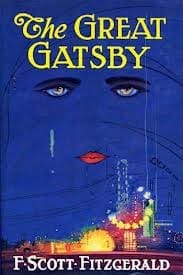
GatsbyI was amused to see that Bob Greenberger, who suggested this month’s Crazy 8 blog topic “What one piece of writing inspires us?” and wrote the first blog entry based on it, violated the premise right off the bat. Being asked to single out a favorite book or piece of writing is, as he so correctly observed, like being asked to choose a favorite child or family member. Besides, there’s so many ways to be inspired: by a well-constructed story or beautifully realized characters or the elegance (or sparsity) of prose or the reality of the dialog. Bob failed to come up with a single piece that answered the question, deferring instead to the simple truth that inspiration came from different places depending on the mood and the need.

However, in the spirit of the challenge, I did attempt to pick just one piece from a list of favorite writing. I started with what is, in my opinion, the greatest novel of the 20th century, The Great Gatsby (1925) by F. Scott Fitzgerald. It’s a beautifully written, stunning achievement of story telling that I reread at least every couple of years. Despite its dated and deeply ingrained Jazz Age flavor, it remains a gripping tale of one man’s need to reinvent himself in pursuit of an American Dream–not necessarily the American Dream, just the one that Jay Gatsby had imagined for himself. That his dream is, in reality, a vapid and ordinary bit of fluff like Daisy Buchannan is what makes his efforts and his fate so heartbreaking.

But that just lead me to another favorite novel of self-reinvention, Jack London’s autobiographical Martin Eden (1909), the tale of a San Francisco waterfront tough who by the sheer power of ideology and muscular intellect shapes himself into a man of letters and renown who, despite achieving everything he’s sought, is unable to live in a world that can’t also be reshaped to fit his proletariat beliefs. But then, I also love his Sea Wolf (1904), which is less a rousing seafaring adventure than it is a psychological thriller that pits brain against brawn. And then there’s London’s John Barleycorn (1913), another autobiographical novel, this one dealing with the author’s love of and struggles with alcohol.

Of course, it’s impossible for me to think of John Barleycorn without comparing it another great American work on the subject, Pete Hamill’s A Drinking Life (1994), another tough guy writer who dealt head on with his demons and addiction to drinking, this one in the form of a memoir that, if you haven’t read, you owe yourself an apology and the immediate purchase thereof. And how can I talk about Hamill without recommending his lyrical allegorical novel Snow in August (1997) and the fantastical Forever (2003), about a man who draws life from the hero of most of this author’s writing, New York City.

Oh, and speaking of F. Scott Fitzgerald, I didn’t mention his wonderful and heartbreakingly funny Pat Hobby stories, a series of short stories about a down on his heels Hollywood screenwriting hack, written near the end of the author’s life. And, while I’m on the subject of humor, there’s no way I can ignore the surrealist offerings of TV writer Jack Douglas, whose collections of short pieces, My Brother Was An Only Child (1959) and Never Trust A Naked Bus Driver (1960), both first read when I was eleven or twelve years old in the mid-1960s were, besides Mad Magazine, Jerry Lewis, and my father, the biggest influence on my thoroughly warped sense of humor. Not so funny (although it has its moments), but written by another 1950s television writer, is Helene Hanff’s epistolary masterpiece, 84 Charing Cross Road (1970), following her twenty year correspondence with London-based bookseller Frank Doel, a clerk at Marks & Co. located at the aforementioned address, which says more about the love and respect of friendships to me than anything since Huckleberry Finn.

I could keep going, on and on (and on and on and on), from longtime favorites acquired in my childhood like Madeleine L’Engel’s A Wrinkle in Time (1962), Sidney Taylor’s “All-of-a-Kind Family” series, and Jacques Futrelle’s “Thinking Machine” stories, to my two candidates for best science fiction novels of all time, Arthur C. Clarke’s Childhood’s End (1953) and Alfred Bester’s The Stars My Destination (1953), to the great detective and noir writers, including Rex Stout, James M. Cain, Dashiell Hammett, Lawrence Block, and Elmore Leonard, to name just a few, to novels by the likes of Gore Vidal, Frederick Exley, Kurt Vonnegut, William Goldman, Joseph Heller, Graham Greene, and absolutely anything by Phillip Roth…anyone who has ever made me stop dead in the middle of reading what they’ve written to soak in some line or idea. (The latest instance of that happening was while rereading Greene’s Our Man In Havana (1958) with the line, “Time gives poetry to a battlefield.” I mean…wow!)

And I’ve hardly even touched on short stories–J.D. Salinger’s “A Perfect Day for Bananafish” (1948); “The Girls in their Summer Dresses” by Irwin Shaw (1939); Ernest Heminway’s “The Snows of Kilimanjaro” (1936)–and non-fiction, especially biographies of writers, or the great comic book writers…but don’t get me started! I could literally write a book on the books and stories that have had an impact on me and my writing. And, lately, I’ve been reading a lot of plays and screenplays by everyone from Lillian Hellman and Tennessee Williams to Paddy Chayefsky and Aaron Sorkin, looking for inspiration in the craft of writing dialog.

The point (at long last!) is, there’s some inspiration to be found in everything you read. If you’re lucky, it’s positive inspiration that leads you to take a chance on a new way of expressing an old idea or to up your game and reach for the level of prose and quality of writing you’ve just experienced. At the very least, even bad writing can be inspiring, if only as inspiration to avoid duplicating its badness.

But one piece of writing that’s inspired me? I wouldn’t even know where to begin.