
“What ONE Piece of Writing Inspires us?” Surely You Jest, Mr. Greenberger!

GatsbyI was amused to see that Bob Greenberger, who suggested this month’s Crazy 8 blog topic “What one piece of writing inspires us?” and wrote the first blog entry based on it, violated the premise right off the bat. Being asked to single out a favorite book or piece of writing is, as he so correctly observed, like being asked to choose a favorite child or family member. Besides, there’s so many ways to be inspired: by a well-constructed story or beautifully realized characters or the elegance (or sparsity) of prose or the reality of the dialog. Bob failed to come up with a single piece that answered the question, deferring instead to the simple truth that inspiration came from different places depending on the mood and the need.

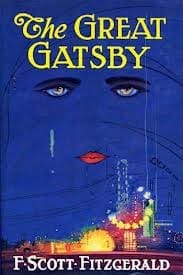
However, in the spirit of the challenge, I did attempt to pick just one piece from a list of favorite writing. I started with what is, in my opinion, the greatest novel of the 20th century, The Great Gatsby (1925) by F. Scott Fitzgerald. It’s a beautifully written, stunning achievement of story telling that I reread at least every couple of years. Despite its dated and deeply ingrained Jazz Age flavor, it remains a gripping tale of one man’s need to reinvent himself in pursuit of an American Dream–not necessarily the American Dream, just the one that Jay Gatsby had imagined for himself. That his dream is, in reality, a vapid and ordinary bit of fluff like Daisy Buchannan is what makes his efforts and his fate so heartbreaking.

But that just lead me to another favorite novel of self-reinvention, Jack London’s autobiographical Martin Eden (1909), the tale of a San Francisco waterfront tough who by the sheer power of ideology and muscular intellect shapes himself into a man of letters and renown who, despite achieving everything he’s sought, is unable to live in a world that can’t also be reshaped to fit his proletariat beliefs. But then, I also love his Sea Wolf (1904), which is less a rousing seafaring adventure than it is a psychological thriller that pits brain against brawn. And then there’s London’s John Barleycorn (1913), another autobiographical novel, this one dealing with the author’s love of and struggles with alcohol.

Of course, it’s impossible for me to think of John Barleycorn without comparing it another great American work on the subject, Pete Hamill’s A Drinking Life (1994), another tough guy writer who dealt head on with his demons and addiction to drinking, this one in the form of a memoir that, if you haven’t read, you owe yourself an apology and the immediate purchase thereof. And how can I talk about Hamill without recommending his lyrical allegorical novel Snow in August (1997) and the fantastical Forever (2003), about a man who draws life from the hero of most of this author’s writing, New York City.

Oh, and speaking of F. Scott Fitzgerald, I didn’t mention his wonderful and heartbreakingly funny Pat Hobby stories, a series of short stories about a down on his heels Hollywood screenwriting hack, written near the end of the author’s life. And, while I’m on the subject of humor, there’s no way I can ignore the surrealist offerings of TV writer Jack Douglas, whose collections of short pieces, My Brother Was An Only Child (1959) and Never Trust A Naked Bus Driver (1960), both first read when I was eleven or twelve years old in the mid-1960s were, besides Mad Magazine, Jerry Lewis, and my father, the biggest influence on my thoroughly warped sense of humor. Not so funny (although it has its moments), but written by another 1950s television writer, is Helene Hanff’s epistolary masterpiece, 84 Charing Cross Road (1970), following her twenty year correspondence with London-based bookseller Frank Doel, a clerk at Marks & Co. located at the aforementioned address, which says more about the love and respect of friendships to me than anything since Huckleberry Finn.

I could keep going, on and on (and on and on and on), from longtime favorites acquired in my childhood like Madeleine L’Engel’s A Wrinkle in Time (1962), Sidney Taylor’s “All-of-a-Kind Family” series, and Jacques Futrelle’s “Thinking Machine” stories, to my two candidates for best science fiction novels of all time, Arthur C. Clarke’s Childhood’s End (1953) and Alfred Bester’s The Stars My Destination (1953), to the great detective and noir writers, including Rex Stout, James M. Cain, Dashiell Hammett, Lawrence Block, and Elmore Leonard, to name just a few, to novels by the likes of Gore Vidal, Frederick Exley, Kurt Vonnegut, William Goldman, Joseph Heller, Graham Greene, and absolutely anything by Phillip Roth…anyone who has ever made me stop dead in the middle of reading what they’ve written to soak in some line or idea. (The latest instance of that happening was while rereading Greene’s Our Man In Havana (1958) with the line, “Time gives poetry to a battlefield.” I mean…wow!)

And I’ve hardly even touched on short stories–J.D. Salinger’s “A Perfect Day for Bananafish” (1948); “The Girls in their Summer Dresses” by Irwin Shaw (1939); Ernest Heminway’s “The Snows of Kilimanjaro” (1936)–and non-fiction, especially biographies of writers, or the great comic book writers…but don’t get me started! I could literally write a book on the books and stories that have had an impact on me and my writing. And, lately, I’ve been reading a lot of plays and screenplays by everyone from Lillian Hellman and Tennessee Williams to Paddy Chayefsky and Aaron Sorkin, looking for inspiration in the craft of writing dialog.

The point (at long last!) is, there’s some inspiration to be found in everything you read. If you’re lucky, it’s positive inspiration that leads you to take a chance on a new way of expressing an old idea or to up your game and reach for the level of prose and quality of writing you’ve just experienced. At the very least, even bad writing can be inspiring, if only as inspiration to avoid duplicating its badness.

But one piece of writing that’s inspired me? I wouldn’t even know where to begin.

Mike Friedman Finds Inspiration in Ray Bradbury’s Words

“One minute it was Ohio winter, with doors closed, windows locked, the panes blind with frost, icicles fringing every roof, children skiing on  slopes, housewives lumbering like great black bears in their furs along the icy streets.
“And then a long wave of warmth crossed the small town. A flooding sea of hot air; it seemed as if someone had left a bakery door open…”
It’s a passage from a story called “Rocket Summer”. A beautiful, evocative passage. But you can start any Ray Bradbury short story and find a passage just as beautiful and evocative.
Bradbury is perhaps best known for his novels, Fahrenheit 451 and Something Wicked This Way Comes, but I think he actually shone much brighter as a short story writer. In The Martian Chronicles and his other collections, he produced tales that sent my imagination soaring.
He also taught me something that’s stood me in good stead as a writer. I’ll call it “dramatic distance.”
Say there’s a monster on the other side of a football field, lurching toward me. It’s scary as it crosses the other end zone, but I can deal. A little scarier as it hits the twenty-yard line, and scarier still at the fifty. By the time it gets into my red zone, my heart is crashing against my ribs. At the one-yard line, it’s hard to breathe. And so on.
Clearly, the closer it gets, the scarier it becomes. But that’s no big insight. In fact, it’s pretty obvious.
But how much closer can we get than the one-yard line? That’s where Bradbury came in. In “The Third Expedition”, it’s the protagonist’s own brother, sleeping beside him in the room they share, that suddenly looms as a threat. In The Veldt, the creeping danger comes not from a monster but from one’s own children. That’s pretty close. In The Small Assassin, the threat’s not just a child but an infant, the kind you suckle and hold in your arms and shower with kisses. Even closer.
And then there’s “The Skeleton”. In that one, it’s the protagonist’s own bones that are trying to kill him, trying to choke the life out of him. Can’t get any closer than that, right? Or can we? In “The Fever”, a child is taken over by a virus that transforms his cells one by one, gradually killing him from within.
Dramatic distance. Bradbury would probably have called it something else; he had a way with words most of us can only shake our heads at and envy. But then, he was Ray Bradbury.

What One Piece of Writing Inspires Us?

I hate being asked about a favorite writer or book because it is like singling out a favorite child or family member. I like many different writers, many different books and have been an omnivorous reader for so long that I love certain books but prefer reading other, new works rather than circle back and keep re-reading the same ones.

Also, as I have grown up and have called upon all my reading to perform various tasks, from writing fiction to teaching in the classroom, different authors and works come to mind. I envy those who can conjure up beloved passages of fiction and poetry, especially their own works. My mind just doesn’t work that way.

So, this month, as the Crazy 8 Press writers discuss the one piece of writing that most inspires us, I am drawing a blank. The answer really is: it depends. Much as I put on different music for different tasks, different works come to mind.

For example, when I’m feeling really stuck, I read West Wing scripts by Aaron Sorkin to look at not only structure but how dialogue can reveal character. In a lot of my later Star Trek fiction, I found those works particularly useful.

Now that I am in the classroom, I realize different works about the writing and reading process, such as Stephen King’s On Writing come to mind and can be used with greater effectiveness than pure academic texts on the subject. Heck, whenever I get a chance to teach a creative writing course that may be the one book they read cover to cover. Beyond that, I’ve worked my way through various texts on the writing process such as Donald Maas’ Writing the Breakout Novel or Peter David’s Writing for Comics.

Other times, I study how certain prime time shows are structured. I’ve made little secret that I think Shonda Rhimes’ structure on Grey’s Anatomy is pretty strong and it’s testament to the foundation that it’s endured for a decade.  I’m studying shorter run series, such as House of Cards to see how to gain stronger impact when you’re limited in duration.

I’ve recently read the eighth and nine novels in Jim Butcher’s wonder Dresden Files series and have admired how he continues to advance the meta story while putting his protagonist through the wringer and that despite surviving each escapade, still doesn’t realize how powerful and successful he has been. All he sees are the flaws which in its own way is a strength and something I can learn from.

So really, it depends upon time and circumstance but the sheer breadth and depth of the writing I’ve exposed myself to really has made me a better reader and, hopefully, a stronger writer.

The Jelly Jar Fatality

It began with a jelly jar, and ended with a doorknob.

Okay. So I need you to be with me for a minute.

Being a writer, particularly an author who takes a year or two complete each novel, the research and writing process is predominantly a solitary experience, and one that readers — for the most part — don’t see.

Well … here’s a peak through that window as I look to finish the first Finders Keepers sequel, and my third novel under the Crazy 8 Press banner:

The last few months have been a whirling dervish. I recently sold my apartment in Queens, NY, and, at least for the time being, I’m living in my in-law’s loft in Central New Jersey.

And when I say “I”, I’m talking me, my wife, my three-year-old twins, and my dog. So, yeah … it’s an adjustment.

During this process — which is still ongoing — I’m also trying to buy a house in Northern New Jersey. If all goes well, it’ll be another 2-3 months, and then we get to start our new life, all living in one place with all of our stuff. Coolio.

Only … I still have to be a dad and a husband and keep delivering the goods for my full time day job in Manhattan. And … I’ve got another book to write! Yikes!

So where does the jelly jar and doorknob come into play? Glad you asked.

About three months ago, as we really started the packing process, and the end was finally in sight to sell our apartment, things started to fall apart.

Literally.

The first was the refrigerator. One morning, after having walked the dog, I came back — thinking about a key sequence I needed to smooth out for the Finders Keepers sequel.

But when I opened the fridge to get myself a cold drink … WHAM-O!

A jelly jar fell from the shelf, and smashed on the floor. The jar fell because the protective plate on the inner door fell apart. It broke. And by the way, have you ever tried cleaning up jelly and broken glass off the floor while keeping your dog and young son from trying to ‘help’ you? Double yikes.

Turns out, however, that the jelly jar fatality was just the beginning. In the following weeks, not one, but two more inner refrigerator shelves broke. Three of the four burners on my stove went out. The light socket in the hall closet died.

Meanwhile, I’m trying to hold the rest of my life together, and somehow find the brain space to keep the Finders Keepers sequel moving forward. Delusional on my part? Possibly. But I’m a writer through and through, and us writer dudes have a veeeeeery tough time putting projects on hold.

Nevertheless, the boxes are piling up in my apartment, all while we continue to pack, to wrap up negotiations on selling my apartment AND on the weekends going house hunting in New Jersey to find a new place to live while we also coordinate child care during the few months we’ll be with my in-laws.


And then the toilet seat breaks. Not the whole toilet, just the seat and lid. And because it’s us, it’s not a standard ceramic seat, but a specialty seat that needs to be special ordered. So when I called the plumber we used asking for assistance — perhaps not as cordially as I should have — he basically told me to stick it someplace unsavory.

Which meant me going back to him and groveling appropriately to smooth things over — which I did — and we got a new seat delivered and installed. And then three weeks later … it came lose again! Ah! But it was still hanging on. Barely.

So now we’re getting closer and closer to moving out of the apartment — movers are booked, closing is scheduled, we’ve almost — almost — arranged for day care in New Jersey – and I’m still holding out hope — fleeting as it may be — that I can advance the Finders Keepers sequel just a bit.

I did manage to squeeze in a weekend appearance at Shore Leave, in August, and I do have a few others signings lined up.

And then … just two days before I needed to move out — and have the buyer of our apartment do a final inspection before she writes us the big check — I reach for the doorknob, so I can enter the hallway.

Something I’ve done thousands and thousands and thousands of times over the past eight years.

I reach for the doorknob and … it fell off.

Seriously.

The doorknob. Fell. Off.

It was one of those classic ‘laugh or cry’ moments. And to protect my manhood here, I won’t say which.

Later that day, I went out to Home Depot to get more boxes, and pick up the inner doorknob stem to fix the darn thing. Only … Home Depot doesn’t carry that one particular part. Grrrr. Next up was a trip to the hardware store, which — mercifully — did have it, and after a few twists with a screwdriver, the doorknob was back in working order.

There’s actually more to this story — so much more — but it would take more time and energy than any of us have.

In terms of my living situation, my apartment is officially sold, the check has cleared and in my bank account, and I am, indeed, living in my in-law’s loft. With a nifty 2 hour commute —  each way, every day. But we’re getting closer to buying our own house, so there’s light at the end of this enormous tunnel we’ve been negotiating.

As for the Finders Keepers sequel … I haven’t been able to clack the keys on it for a while, but I’ll be back at it soon enough. The rest of the boys at Crazy 8 Press are bugging me to get that done!

But when I do finish, and I will … if you happen to notice a scene — or even a slight reference in there — to jelly jars or doorknobs … you now know the story behind the story. You’ve peaked through the window.

And if you’ve got a jelly jar story of your own … share it with us. Maybe it’ll make it into the next Finders Keepers novel.

Unless, of course, my computer falls apart while I’m writing it.

To The Little People

As I lounge here in the Crazy 8 Press Secret Headquarters, located in an inactive volcano, I am moved to write on the minions who make our lives so much easier. The lackeys, hunchbacks, and flunkies. You know– the little people.

Yes, I know I’m 6’6 and that makes almost everybody a little person to me. Well, of course. You can’t sit in a high back leather chair, swirling a snifter of cognac, stroking my cat and laughing maniacally without a healthy dose of megalomania.

And so, I raise my glass to the toadies who make my existence bearable.

There’s Alyosha, who keeps the shark tank scrubbed and stocked with chum. Or former chums. (My cat is meowing loudly again. Perhaps I should drop him in the shark tank. It might be the only way to get a decent night’s sleep around here.)

There’s Serena… ah, lovely Serena. She keeps the paperwork going. Actually, she doesn’t do much more than sharpen pencils and pick up paper clips, but she looks so fetching when she bends over to do it.

And then there’s Roquefort, who claims to be very important because he says he makes sure the volcano stays dormant, but I haven’t heard a single rumble all the time I’ve been here. I think he’s goldbricking. I also think he’s next into the tank. We can always find new henchmen to serve in our plans to take over the world– or at least get the place cleaned up here for the monthly game of Risk we play with real armies.

But that’s my point. People claim it’s always tough to find decent help, but that simply hasn’t been true in my experience. There’s always a certain class of people who want to be ruled, and there are others who want to be run roughshod over, and there are… hmm. The volcano warning is going off.

But that’s impossible! Roquefort is supposed to be taking care of these– damn. His voicemail just told me he’s taking his first vacation in ten years. And he’s taking the asbestos suits with him.

Ah well. Perhaps we need a better class of stooge around here. I’ll have to look into that after I get out of the burn ward.

“Say, Mister, Could You Stake a Fellow American to a Meal?”

Bogie

That’s the line Humphrey Bogart (as down on his luck gold prospector Fred C. Dobbs) uses on the Man in the White Suit (played by director John Houston) he keeps accosting for a handout in the 1948 film classic, The Treasure of the Sierra Madre. Down and out in Mexico, Bogie inadvertently hits up the same guy for money, until, on his third time to that same well, the Man in the White Suit says, “Such impudence never came my way. Early this afternoon I gave you money…while I was having my shoes polished I gave you more money…now you put the bite on me again. Do me a favor, will ya? Go occasionally to somebody else — it’s beginning to get tiresome.”

Bogie is humbly apologetic: “I never knowed it was you. I never looked at your face — I just looked at your hands and the money you gave me. Beg pardon, mister, I promise I’ll never put the bite on you again,” and the Man generously lays one last peso on him (“This is the very last you get from me. Just to make sure you don’t forget your promise, here’s another peso.”)…the peso Dobbs uses to buy the lottery ticket that provides him and fellow prospectors Howard and Curtin to their grubstake.

These days, I feel a lot like Fred C. Dobbs. I keep coming up to you, over and over again, hat in hand, asking you for a couple of pesos…or, in my case, to buy my book and the books of my fellow writers involved our own humble little attempt at mining gold out of the cold, hard mountain we call Crazy 8 Press. But unlike Fred C. Dobbs, I’m trying awfully hard not to take advantage of your good will and generosity…and, also unlike the hapless prospector, if you do decide to drop that peso in my cup, you’re getting something in return beyond the warm glow of a good deed done: I hope you’ll find that you’ve exchanged your hard-earned cash for a damned good read, either by me or by fellow Crazy 8 inmates, Michael Jan Friedman, Aaron Rosenberg, Bob Greenberger, Russ Colchamiro, Glenn Hauman, Peter David, and Howard Weinstein.

Crazy 8 authors don’t take our readers for granted, of that I can assure you. I’ve been a writer in the public eye for almost four decades, during which I’ve attended I don’t know how many scores of conventions and book fairs, probably in the hundreds if I bothered to count, and never once has my reaction to a reader or fan who has approached me with something I’ve written to be signed or a hand to shake been anything but a grateful “thank you!” Just this past weekend, I was a guest at the Baltimore Comic-Con where one hyper-apologetic fan stopped me in my wanderings around the convention floor to tell me how much he’s enjoyed my work over the years, repeating how he hated to bother me, but would I mind signing his book…?

What I said to him was the honest truth: He had nothing to apologize for and not only was it not a bother, but I was happy and honored to do it. I know how I feel when I get to meet someone whose work I admire. I also know how it feels to have an admirer tell me what my work has meant to them. It is, quite simply, a win-win situation: One of us has met someone we admire; the other has had the satisfaction of hearing that what we’ve written has touched that reader.

Because without our readers, we’re just a bunch of weirdos hunched over our word processors in the basement, talking to no one.

So even if you don’t have a peso to spare at the moment but you’ve ever enjoyed anything I (or Mike or Aaron or Bob or Russ or the rest of us) have written, or if one of our storirs has touched you or made a difference in your world, you can still do a solid for a fellow American by helping us spread the word about Crazy 8 Press.

Share our blog and website. Talk about us on Twitter; re-Tweet our Tweets. Mention us on Facebook, “Like” the Crazy 8 Press Facebook page, “Share” the posts of Crazy 8 authors, or do whatever it is you do on Tumblr or whatever form of social media you kids are on these days. Tell your friends. Hell, tell your enemies!

And if you’re flush and can support us with your dollars to buy our books, print or electronic versions, let people know what you’ve read and what you think of it. Twitter, Facebook, Tumblr, or better yet, write a quick review on Amazon.com or BarnesandNoble.com, or post it on your own blog or website. What’s better than a recommendation of a good read from a friend?

We’d like your money, sure, but we’re just as grateful for your moral support and your efforts at word of mouth to spread the word. Support us with the knowledge that the advantage of your support accrues not to some faceless behemoth of a corporate publisher but directly to the authors themselves.

Fred C. Dobbs may not have looked his benefactor in the face, but know full well that the Crazy 8 authors do and appreciate everything you do for us, whether it’s buying our books or posting a link to our website. It takes a lot of time, energy, and sweat to write a book, and just as much to see it through to publication. Which reminds me of one last quote from Sierra Madre, this one spoken by grizzled old prospector Howard (Walter Houston):

“A thousand men, say, go searchin’ for gold. After six months, one of them’s lucky: one out of a thousand. His find represents not only his own labor, but that of nine hundred and ninety-nine others to boot. That’s six thousand months, five hundred years, scramblin’ over a mountain, goin’ hungry and thirsty. An ounce of gold, mister, is worth what it is because of the human labor that went into the findin’ and the gettin’ of it.”

So, yeah, even if you’ve already handed over a peso or two (or three or four!) to me, I’ll be back in your face soon enough, asking for a handout…but in return, I’ll try my damnedest to entertain you. As will the rest of the Crazy 8 gang, so I hope you’ll forgive our impudence.

Crazy Good Stories