Quite literally, the first “stories” I ever wrote when I was six and seven years old were comic book stories. I also drew then because obviously a comic book needs pictures to go along with the words. Neither my writing nor pictures from those days pointed to a career in the arts, but I was only just getting started with comics. And writing. But they’ll always be intertwined for me, even now, almost 60 years later when I work primarily in prose.
Writing for DC Comics wasn’t just an idea. It was my goal, my ambition. Even more than that. It was a dream. I didn’t have the easiest childhood and the world of Superman and the Martian Manhunter and the rest of the Justice League was where I went for solace. I wanted to be as close to them as I could get.
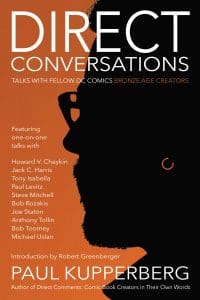
In 1975, the dream became a reality. Coming up through the ranks of fandom and fanzines I finally stumbled through the door of DC and never looked back. Until now, in Direct Conversations: Talks With Fellow DC Comics Bronze Age Creators. Nearly 50 years and more than a thousand stories later I sat down with ten old friends and colleagues to talk about those good old Bronze Age days when we were first breaking into the business at a time when the business itself seemed to be on the verge of breaking apart. Another old friend, fellow DC, Weekly World News, and Crazy 8 Press pal Robert Greenberger wrote the introduction.
Included are conversations with: Writer/artist Howard V. Chaykin, writer/editor Jack C. Harris, writer/editor Tony Isabella, writer/editor/former DC president and publisher Paul Levitz, production artist/inker Steve Mitchell, writer/former DC production manager Bob Rozakis, artist Joe Staton, colorist Anthony Tollin, writer Bob Toomey, and writer/Batman film franchise producer Michael Uslan.
The Direct Conversations Kickstarter campaign went on October 5, 2022 at 12 noon ET and will run through October 25. CLICK HERE TO VIEW OR SUPPORT DIRECT CONVERSATIONS ON KICKSTARTER.
I’m offering signed copies of Direct Conversations: Talks With Fellow DC Comics Bronze Age Creators paperback, either by itself or with a PDF e-copy, or in combination with signed copies of one, two, or all three of my previously published books about comics and PDF e-copies: Direct Comments: Comic Book Creators in their Own Words, Paul Kupperberg’s Illustrated Guide to Writing Comics, and I Never Write for the Money But I Always Turn in the Manuscript for a Check. I know backers have come to expect stretch goals and elaborate rewards in Kickstarter campaigns, but from the reaction I’ve been getting to this project’s made me think I don’t need a lot of frills to sell a book of conversations with Bronze Age creators about the history they’ve witnessed, or in a lot of cases, made.
Direct Conversations: Talks With Fellow DC Comics Bronze Age Creators. It’s like eavesdropping on a bunch of old pros over lunch at a comic con!


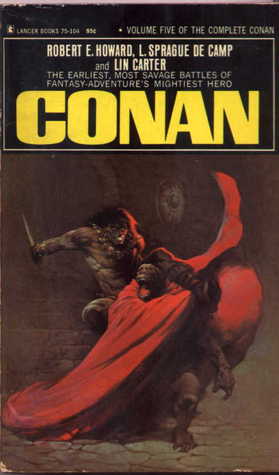 The first sword and sorcery I ever read was Robert E. Howard’s Conan, in the books published in the mid-1960s in paperback by Lancer Books, with the soon to become iconic cover paintings by Frank Frazetta. My father had brought home a recently published paperback edition of Tarzan of the Apes by Edgar Rice Burroughs that someone had left behind at his office. I recognized the Ape Man from the movies I’d seen on TV, but I wasn’t prepared for what I read. It was like I had discovered the real-life version of what was, essentially, portrayed as a grunting cartoon character in the movies. It floored me. I still think it’s a great novel, as close to literature as pulp fiction got when it was published in 1912. I reread it every few years.
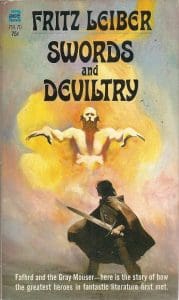 Fafnir and the Gray Mouser stood out from the barbaric crowd. First, they weren’t exactly barbarians. I mean, technically sure, the giant swordsman and minstrel Fafnir and his partner, the diminutive former wizard’s apprentice and swordsman hailed from barbaric roots, but they were more sophisticated and cosmopolitan than their loin-cloth wearing brethren. Fafnir and the Mouser were rogues and more true-to-life, characters who acted in the world instead of just reacting. Not only were Lieber’s stories witty, his characters had senses of humor. No grim and gritty angst-filled monologues for these cheating, brawling, larcenous, wenching adventurers. Their swords were for hire and life was good.
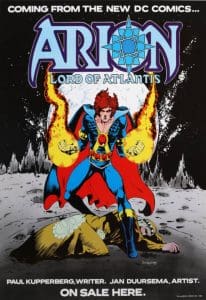 I fixed that but good in 1992 when I revived the character in 1992’s Arion the Immortal miniseries (with art by Ron Wilson). It’s 45,000 years later, Atlantis has long sunk beneath the sea (taking all but the most minute bits of powerful magic with it), and there’s a colony of surviving Atlantean deities living in modern-day New York City. Arion is one of them, the quintessential “you kids get off my lawn or I’ll turn the hose on you!” old man, wrinkled and frail looking. He lives in a one-room apartment over Carnegie Hall and makes his living as a three-card monte dealer in Times Square. His ancient foe owns a deli on the Lower East Side that he eats in all the time. And when the magic returns, making Arion young again, well, chaotic hilarity ensued.