Ten years ago today, Mike Friedman had to pee.
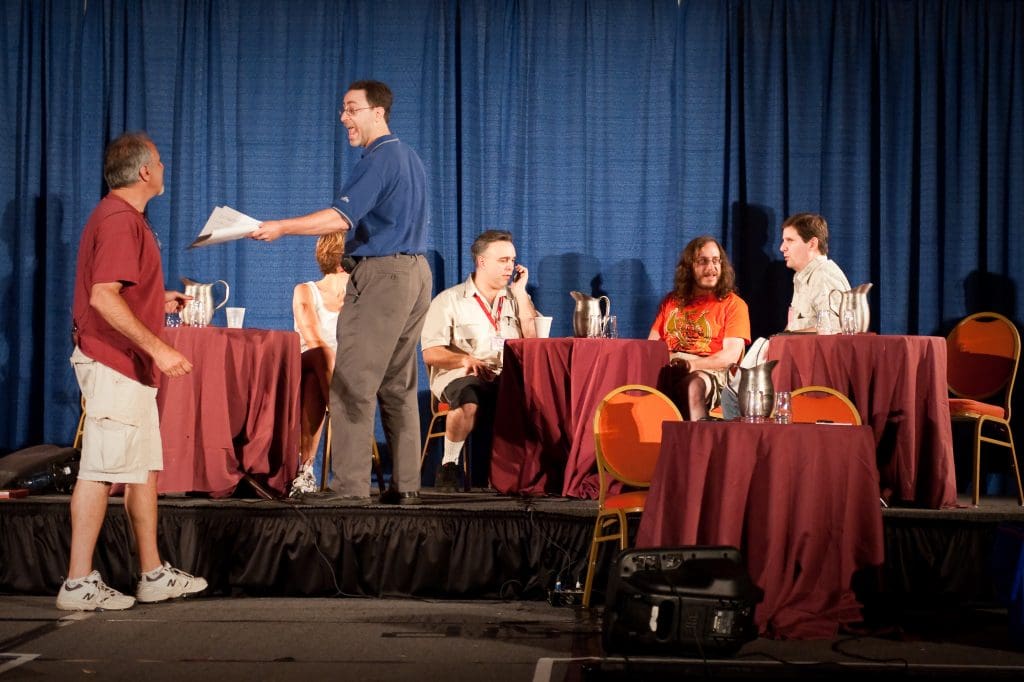
While he was taking care of business, a gaggle of authors at Shore Leave, the premiere fan-run con in America, were lamenting the idiocy of publishers letting marketing people drive editorial purchases. As a result, ideas that got us excited were being met with, “we can’t pigeonhole that so can’t sell it”.
We were watching other authors begin to self-publish, with more than a few forming their own consortiums. By the time Mike came out of the men’s room, we buttonholed him, since he started this thread of thinking earlier. Before we knew it, a group was forming.
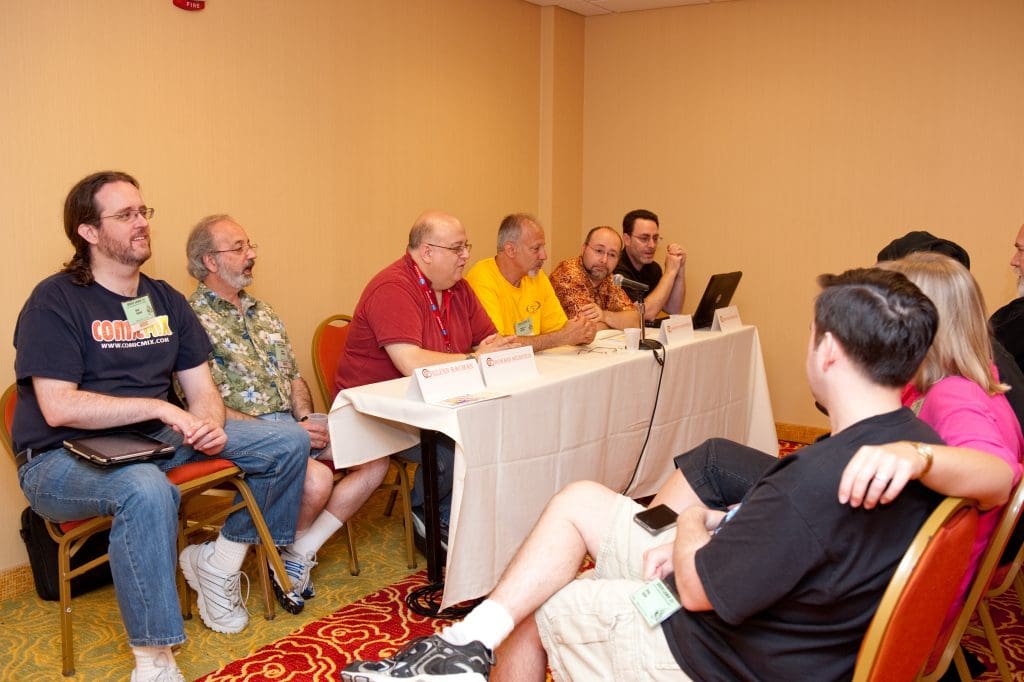
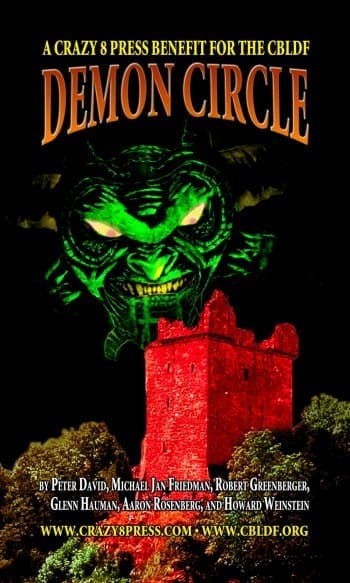
A year later, Crazy 8 Press made its triumphant debut at Shore Leave, with the authors publicly writing a round-robin novella that was our first release. Demon Circle was published at the beginning of fall 2011 and we have been going at it ever since.
We started with Mike, Aaron Rosenberg, Peter David, Howard Weinstein, Glenn Hauman, and Robert Greenberger. Others, who were part of the initial planning, bowed out, but we still called ourselves Crazy 8, because, why not? Soon after, Paul Kupperberg joined the band and a few years later, we welcomed in Russ Colchamiro. Two years back, we invited Mary Fan to the asylum. Kathleen O’Shea David and Jenifer Purcell Rosenberg both took turns trying to help our social marketing and wrangling the eight author cats. Silly them. But, both were welcomed to the party and each has contributed to several of our anthologies.

Crazy 8 Press is unique in that it has a decentralized structure as authors publish as they see fit, and we all join forces to help market and support each new release. About six years ago, we struck on the notion that since most of us attended Shore Leave, it was an ideal place to launch a new title and hit on the themed-anthology idea in order to showcase all of our us. Then we started inviting our friends and we generated some excitement.
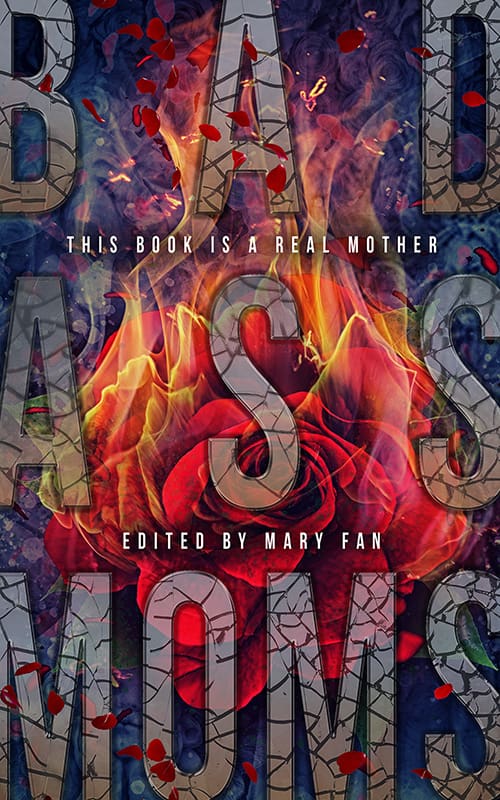
Last year, we decided this was working so well, that we’d shift to twice a year releases, timed to our appearances at Farpoint in February and Shore Leave in July. Covid-19 sort of threw a spanner in the works so that first release, Mike’s Pangaea III, got delayed. But, tomorrow, right on schedule, Mary Fan’s Bad Ass Moms arrives right on time. Since it is coming out at the beginning of our tenth anniversary year, it also sports our brand new 10th anniversary logo.
We have plans brewing for the next twelve months, including some new titles, some merchandise, and whatever else we can do while socially distance and keeping one another safe.

This looks to be an exciting year for us so stay tuned for our announcements.
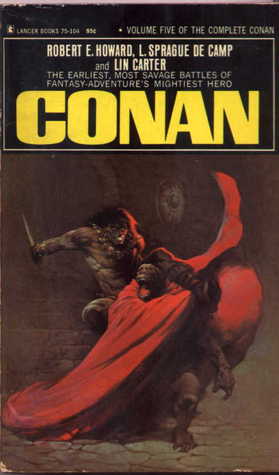 The first sword and sorcery I ever read was Robert E. Howard’s Conan, in the books published in the mid-1960s in paperback by Lancer Books, with the soon to become iconic cover paintings by Frank Frazetta. My father had brought home a recently published paperback edition of Tarzan of the Apes by Edgar Rice Burroughs that someone had left behind at his office. I recognized the Ape Man from the movies I’d seen on TV, but I wasn’t prepared for what I read. It was like I had discovered the real-life version of what was, essentially, portrayed as a grunting cartoon character in the movies. It floored me. I still think it’s a great novel, as close to literature as pulp fiction got when it was published in 1912. I reread it every few years.
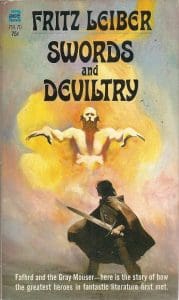 Fafnir and the Gray Mouser stood out from the barbaric crowd. First, they weren’t exactly barbarians. I mean, technically sure, the giant swordsman and minstrel Fafnir and his partner, the diminutive former wizard’s apprentice and swordsman hailed from barbaric roots, but they were more sophisticated and cosmopolitan than their loin-cloth wearing brethren. Fafnir and the Mouser were rogues and more true-to-life, characters who acted in the world instead of just reacting. Not only were Lieber’s stories witty, his characters had senses of humor. No grim and gritty angst-filled monologues for these cheating, brawling, larcenous, wenching adventurers. Their swords were for hire and life was good.
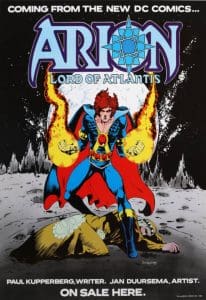 I fixed that but good in 1992 when I revived the character in 1992’s Arion the Immortal miniseries (with art by Ron Wilson). It’s 45,000 years later, Atlantis has long sunk beneath the sea (taking all but the most minute bits of powerful magic with it), and there’s a colony of surviving Atlantean deities living in modern-day New York City. Arion is one of them, the quintessential “you kids get off my lawn or I’ll turn the hose on you!” old man, wrinkled and frail looking. He lives in a one-room apartment over Carnegie Hall and makes his living as a three-card monte dealer in Times Square. His ancient foe owns a deli on the Lower East Side that he eats in all the time. And when the magic returns, making Arion young again, well, chaotic hilarity ensued.